Introduction
Many businesses operate with processes that have evolved over time. As companies grow, operations become more complex, responsibilities expand, and inefficiencies can become part of everyday routines.
Management may see that costs are increasing, productivity is inconsistent, or operational targets are not being achieved. However, identifying the actual causes of these problems is often much more difficult than recognizing the symptoms.
This is where an operational audit becomes valuable.
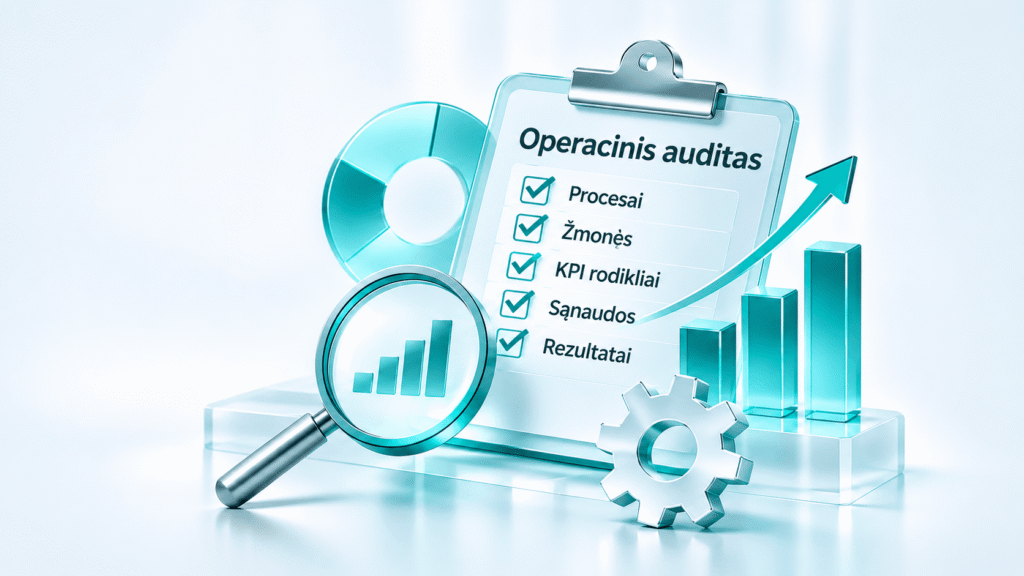
An operational audit provides a structured assessment of how effectively a business operates. It examines processes, resources, performance indicators, management practices and organisational efficiency to identify opportunities for improvement.
Rather than focusing only on financial results, an operational audit looks at how those results are achieved — and what can be done to improve them.
1. What Is an Operational Audit?
An operational audit is a systematic evaluation of an organisation’s processes, activities and resources to determine whether they are being used efficiently and effectively.
Its primary objective is to identify operational weaknesses, unnecessary costs, productivity losses and opportunities to improve overall business performance.
Unlike a traditional financial audit, which primarily examines financial statements and compliance, an operational audit focuses on the actual performance of business operations.
It typically evaluates:
- Process efficiency: Are workflows structured logically, or do they contain unnecessary steps and delays?
- Resource utilisation: Are employees, equipment and working hours being used effectively?
- Productivity: Does the business achieve the expected output with the available resources?
- Performance management: Are the right KPIs measured, monitored and acted upon?
- Cost efficiency: Where are unnecessary expenses, losses and operational waste occurring?
- Management practices: Are responsibilities, targets and decision-making processes clearly defined?
The outcome is a clear understanding of how the organisation performs and which improvements can deliver measurable results.
2. Why Does Your Business Need an Operational Audit?
Operational problems are not always visible in financial reports. A company may be profitable while still losing significant resources through inefficient processes, poor planning or ineffective workforce management.
An operational audit helps management move beyond assumptions and understand what is really happening.
Identify Hidden Inefficiencies
Processes that appear normal to employees may contain unnecessary activities, waiting times, repeated work or communication gaps.
An audit examines the actual workflow and identifies where time and resources are being lost.
Reduce Operational Costs
Increasing costs do not always mean that more resources are needed. In many cases, existing resources are simply not being used efficiently.
By identifying unnecessary activities, overtime, idle time, errors and process bottlenecks, businesses can reduce costs without compromising operational quality.
Improve Employee Productivity
Employee productivity depends on more than individual performance. Work organisation, workload distribution, planning, equipment availability and management practices all influence results.
An operational audit helps identify whether employees have the right conditions, processes and performance expectations to achieve their targets.
Strengthen KPI Management
Many organisations collect operational data but struggle to translate it into meaningful decisions.
An audit evaluates whether KPIs are relevant, measurable and connected to business objectives. It also examines how regularly performance is reviewed and whether corrective actions are implemented.
Support Better Management Decisions
Management decisions are only as effective as the information behind them.
An operational audit provides evidence-based insights into operational strengths, weaknesses and improvement priorities, helping leaders focus on the areas with the greatest business impact.
3. What Does an Operational Audit Examine?
The scope of an operational audit depends on the organisation’s size, industry and objectives. However, several areas are particularly important.
Operational Processes
The audit examines how work moves through the organisation, from the initial task to the final output. It identifies unnecessary steps, bottlenecks, waiting times, duplicated activities and opportunities for process standardization.
Workforce Efficiency
Workforce analysis focuses on how effectively working hours and employee capacity are utilised.
Typical areas include:
- Productivity per employee or team
- Working time utilisation
- Absenteeism and overtime
- Workload distribution
- Performance differences between shifts or departments
Warehouse and Logistics Performance
For production, distribution and logistics companies, warehouse operations can have a significant impact on overall costs.
An audit may examine:
- Picking and packing productivity
- Order processing times
- Inventory accuracy
- Material flow
- Warehouse space utilisation
- Equipment and labour utilisation
KPIs and Performance Management
The audit evaluates whether the organisation measures what really matters.
Examples of operational KPIs include:
| KPI | What It Measures |
| Labour Productivity | Output per working hour |
| Labour Cost per Unit | Labour cost relative to production output |
| On-Time Delivery | Ability to meet delivery commitments |
| Order Picking Accuracy | Accuracy of warehouse picking operations |
| Equipment Utilisation | Effective use of available equipment |
| Absenteeism Rate | Employee absence levels |
| Process Cycle Time | Time required to complete a process |
The objective is not to introduce as many KPIs as possible. It is to establish a focused performance measurement system that supports effective management.
4. How Is an Operational Audit Performed?
An effective operational audit should follow a structured methodology. It should combine data analysis with direct observation and discussions with employees and management.
Step 1: Define Objectives and Scope
The first step is to understand the company’s operational challenges and define the areas that require assessment.
Typical objectives include reducing operational costs, improving productivity, increasing warehouse efficiency or strengthening KPI management.
Step 2: Collect and Analyse Data
Relevant operational information is collected and analysed.
This may include production reports, working hours, productivity data, warehouse performance, costs, service levels and existing KPIs.
Data analysis helps establish the current performance baseline and identify areas that require further investigation.
Step 3: Observe Actual Operations
Reports alone rarely provide the complete picture.
Direct observation allows auditors to understand how processes work in practice, identify deviations from established procedures and recognize problems that may not appear in management reports.
Discussions with employees and supervisors provide additional context.
Step 4: Identify Root Causes
Identifying a problem is only the beginning.
The audit must establish why the problem exists. Low productivity, for example, may be caused by poor planning, unbalanced workloads, equipment downtime, unclear responsibilities or inefficient processes.
Understanding root causes prevents businesses from implementing temporary solutions that fail to address the underlying issues.
Step 5: Develop an Improvement Action Plan
Audit findings should be translated into practical recommendations.
Each improvement should have:
- A clearly defined objective
- An assigned responsible person
- A measurable expected result
- A realistic implementation deadline
- A relevant KPI to monitor progress
Recommendations should be prioritized according to their expected business impact, implementation effort and urgency.
Step 6: Monitor Results
An operational audit should not end with a report.
The real value comes from implementing improvements and monitoring whether they deliver the expected results.
Regular performance reviews, KPI tracking and management follow-up help ensure that improvements become part of everyday operations.
5. What Results Can an Operational Audit Deliver?
The results depend on the organisation’s starting point and the scope of the audit. However, a well-executed assessment can create measurable improvements across several areas.
| Area | Potential Improvement |
| Productivity | Better output from existing resources |
| Labour Costs | More effective workforce utilisation |
| Processes | Reduced delays and unnecessary activities |
| Warehouse Operations | Improved picking and material flow |
| KPI Management | Clearer performance visibility |
| Management | Faster and more informed decisions |
The most important outcome is not simply identifying inefficiencies. It is creating a realistic improvement roadmap that connects operational changes with business results.
6. When Should Your Business Consider an Operational Audit?
An operational audit can be valuable at different stages of business development.
However, it becomes particularly relevant when:
- Operational costs continue to increase.
- Productivity does not improve despite additional resources.
- Management lacks reliable performance information.
- Employees are working overtime but targets are still missed.
- Different departments or shifts achieve inconsistent results.
- Warehouse or production processes experience recurring bottlenecks.
- The company is growing and existing processes are becoming difficult to manage.
If management recognizes several of these challenges, an operational audit can provide the clarity needed to determine what should be improved first.
7. From Operational Audit to Continuous Improvement
An operational audit should be viewed as the starting point of a continuous improvement process, not as a one-time inspection.
The most successful organisations establish a clear connection between operational analysis, performance measurement and management action.
This means regularly reviewing KPIs, identifying deviations, understanding root causes and implementing corrective actions.
When this approach becomes part of the management routine, operational excellence becomes a measurable business objective rather than an abstract concept.
Conclusion
Every organisation has opportunities to improve the way it operates. However, identifying those opportunities requires more than assumptions or reviewing financial results.
An operational audit provides a structured understanding of processes, workforce efficiency, costs and performance management. It helps businesses identify hidden inefficiencies, establish priorities and develop practical improvement actions.
For companies looking to increase productivity, control costs and strengthen operational performance, an operational audit is an important first step toward sustainable improvement.
At TOP KPI, we help businesses understand how their operations perform, identify improvement opportunities and translate operational insights into measurable business results.
Start with a clear picture of your operations — and build a better-performing business.
Explore TOP KPI AUDIT and discover how to identify the improvement opportunities within your business.